If you are planning a new patio in Massachusetts, the first decision is almost always the same: pavers or poured concrete? Both can look great on day one. The real question is how each one holds up after a decade of New England winters, and that is where they start to behave very differently.
At YellowStone Masonry Group we have built and repaired both for over 50 years across Hudson and Middlesex County. Here is the straight answer, with no sales spin.
How freeze-thaw affects each one
A poured concrete slab is one large, rigid surface. When water gets under it and freezes, the ground heaves and the slab has nowhere to flex. The result, over a few winters, is cracking that you cannot truly repair, only patch.
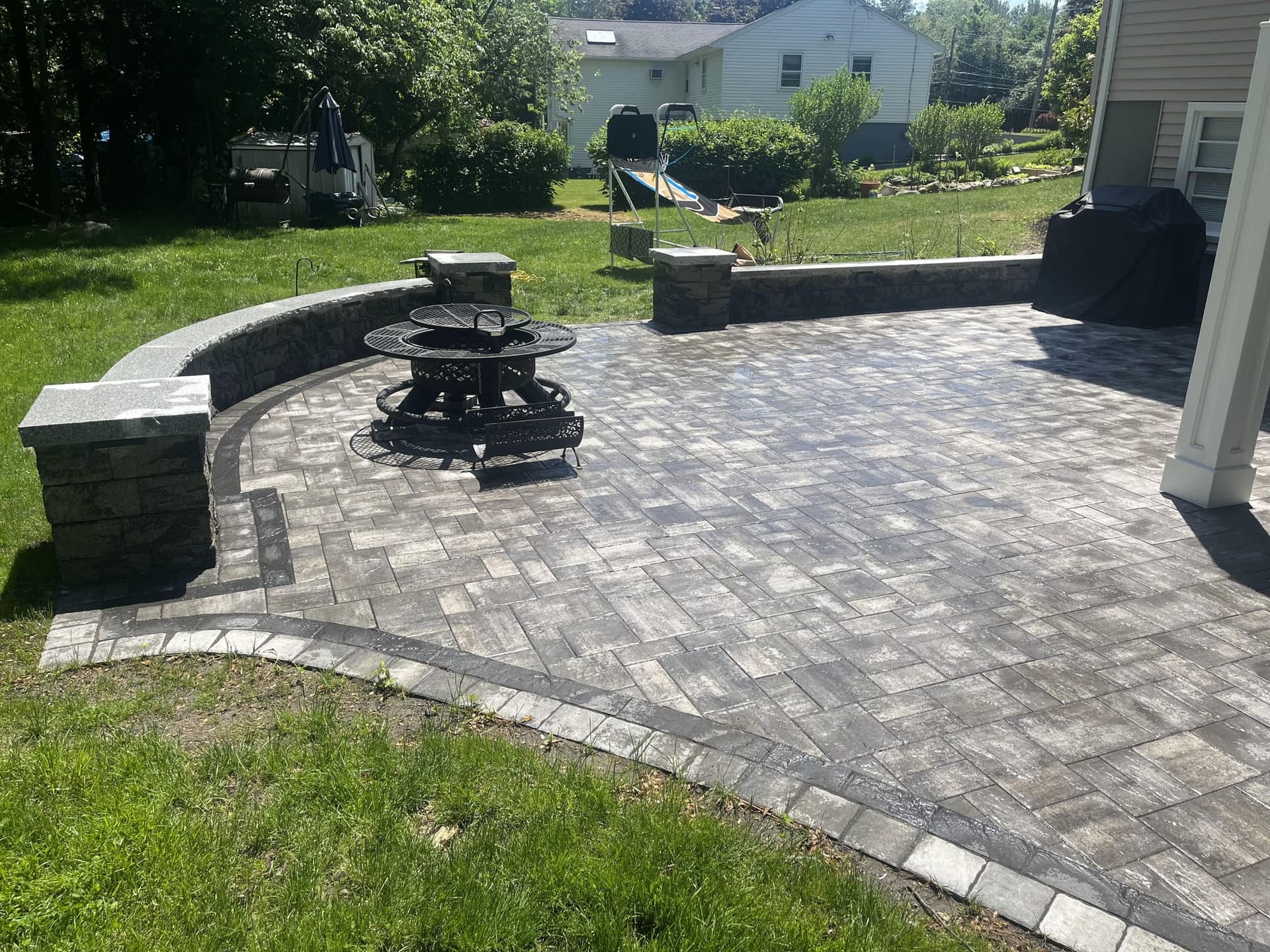
A paver patio is made of many small interlocking units over a deep, compacted base. When the ground moves, the system flexes with it instead of cracking, and any single paver can be lifted and reset. That flexibility is the single biggest reason pavers tend to outlast concrete here.
Durability and lifespan
- Pavers: typically 30 to 50+ years when installed on a proper base, with individual units replaceable.
- Concrete: often shows surface cracking within 5 to 15 years in our climate, and a full slab usually has to be removed to fix it.
- Pavers hide settling far better because they can be re-leveled; concrete cannot.
Maintenance and repair
Concrete is low effort until it cracks, and then the only honest fix is replacement. Pavers need their joint sand refreshed every few years, but a damaged section can be repaired in an afternoon without it being obvious.
The base is what actually determines longevity. A beautiful paver patio on a thin, poorly compacted base will fail just like cheap concrete. Proper excavation, geotextile fabric, compacted gravel in lifts, and the right bedding matter more than the surface you choose.
So which should you choose?
For most Massachusetts homeowners who want a patio that still looks great in 20 years, pavers are the better long-term choice. Concrete can make sense for a tight budget or a very simple, low-visibility slab, but in our freeze-thaw climate it rarely ages as gracefully.
Whatever you choose, the install is everything. We are always happy to walk your yard and give you an honest recommendation for your specific soil and drainage.
Frequently Asked Questions
Can you install pavers over an existing concrete patio?
Sometimes, if the concrete is sound and drainage allows it, but more often we recommend removing failing concrete and building a proper base. We assess this on site.
Do paver patios get weeds between the joints?
Not when polymeric sand and proper edge restraint are used. That combination locks the joints and keeps weeds and ants out for years.
Get Your Free Masonry Estimate
Fill out the form and we'll get back to you within 24 hours.